
Birmingham has been warned that it needs to “get used” to more extreme weather events following a summer of flooding and fire.
The comment, from a city council officer, came after a recently-published report on flood risk management admitted that funding pressures at the authority had impacted its ability to tackle flooding.
It said the financial challenges “has impacted in the level of service”, including the delivery of projects, ongoing maintenance and management of historical flood assets.
Dozens of homes in the north of the city were hit by flooding during the summer, which also saw houses and gardens ravaged by flames during sweltering temperatures.
Green Party councillors said communities were pushed to “crisis point” while a Labour councillor said residents in certain areas are ‘suffering sleepless nights’ amid flooding fears.
Against this backdrop, councillors were recently told that Birmingham faces more frequent rare weather events in the coming years.
Mark Shelswell, director of highways and infrastructure, told a recent scrutiny meeting: “We had the really unfortunate incident [during the summer] where we had a number of properties flooded as a result of Perry Beeches overtopping.
“We’ve got to get more used to those type of events happening within quick succession.
“Everyone was still talking about excessive heat [during the summer] – and then we had flash flooding.
“Typically we would regard that as a once in a hundred year storm event.
“It happened in 2016 – that’s not once in a hundred years, that’s once in 10 years so we need to get a lot better at that.”
But the meeting also heard about the difficulties being faced by the flood management team, with drainage project leader Iqbal Sangha telling councillors: “I’ll be quite frank – we have very limited budget.
“One or two storm events in a year can quite easily impact on our budget.
“Over the years, we’ve had to make cuts and difficult choices. We’ve actually cut back on providing sandbags […] but that was a sacrifice that we had to make.
“We could just not afford it.”
The council previously revealed in the recent report that it will be more difficult in the future to fulfil the duties under the Flood and Water Management Act and help provide emergency response.
“Non-statutory services need to be re-assessed, such as the provision of sandbags to formal flood action groups on request,” it added.
Amid such challenges, Birmingham City Council (BCC) said it will adopt a “more focused, risk-oriented strategy” for inspections and maintenance – one based on numbers of properties affected by flooding.
“[This will] ensure high risk drainage assets are kept as clear as possible to help reduce flood risk,” it said. “The council and flood risk team remain committed to prioritising our work where it is needed most.”
The council also stressed that supporting residents, delivering works and “aligning” funding sources continues to be a major priority.
“We need to work closely with partners, stakeholders, elected members and communities to identify opportunities, attract funding and deliver adaptation measures to become more resilient for future,” it said.
‘Plan of action’
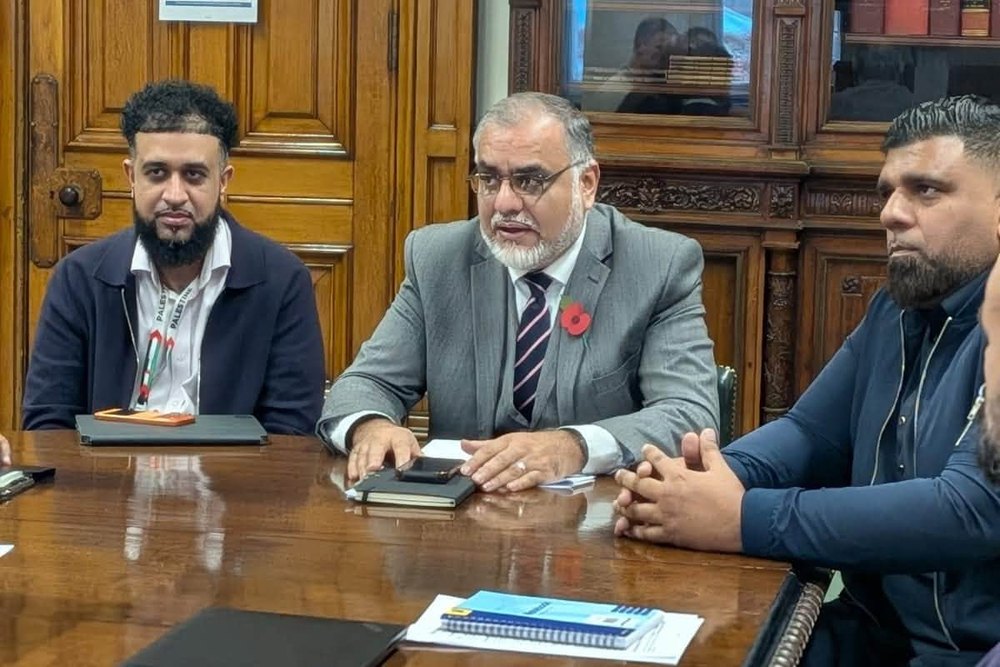
Following the flooding in the summer, Birmingham Perry Barr MP Ayoub Khan said he wanted local agencies to “take ownership” and help resolve the issue for his constituents.
“I convened Birmingham City Council, Severn Trent Water, National Highways and the Environment Agency to build a plan of action that brings real change for affected residents,” he said towards the end of last month.
He added that he will be working alongside senior councillors to “ensure the necessary action is taken to prevent future flooding and protect residents”.
Funding for authorities like Birmingham to meet the duties under the Flood and Water Management Act is provided as part of the local government settlement.
But BCC says this funding is not ring-fenced and the flood risk management team’s budget is dependent on financial pressures and other key services within the council.
The council also said in its recent report that it is pushing ahead with an updated strategy and will be applying for further funding from various sources.
It added that a new government policy, which sets out a “simplified” approach to applying for certain grant funding, will help assist with some of the funding pressures.
By Alexander Brock | Local Democracy Reporting Service
 Renewed bid for controversial HMO after rejections
 Bid to get unauthorised rooftop venue approved rejected again
 Calls for councillor to go despite apology
 Former high street bank to be converted into HMO
 Plan to extend free market stall places