An innovative pilot project has slashed waiting times for dementia assessment and treatment for North Birmingham people aged over 80 by 20 weeks.
Memory Matters brings together GPs, dementia specialists and community organisations together with the aim to reduce the amount of time people wait to be seen.
Over the last six months, 109 dementia assessments have been delivered through participating GP practices, reducing average waiting times for assessment to treatment from 31 weeks to 11 weeks.
Across Birmingham and Solihull there are currently an estimated 13,000 people living with dementia, with this expected to rise to more than 17,000 by 2040.
The current average waiting time for dementia assessments in the region is currently 26 weeks followed by a further nine weeks for treatment where appropriate.
Memory Matters aims to ensure people aged 80 and over receive an assessment and, where appropriate, a diagnosis within 12 weeks.
As well as a reduction in waiting time, assessment to treatment time has also
reduced by 52 per cent, from an average of 15 to seven weeks.
The pilot service led by Birmingham and Solihull Mental Health NHS Foundation Trust (BSMHFT) in partnership with Alzheimer’s Society and Age Connects West Midlands – funded by NHS Birmingham and Solihull’s Fairer Futures Fund.
It was made possible through £500,000 from the Fairer Futures Fund, which runs until 2028.
It is being used by 17 GP practices across North Birmingham. Community mental health nurses work alongside primary care teams, providing specialist expertise and helping people access assessment, advice and ongoing support closer to home.
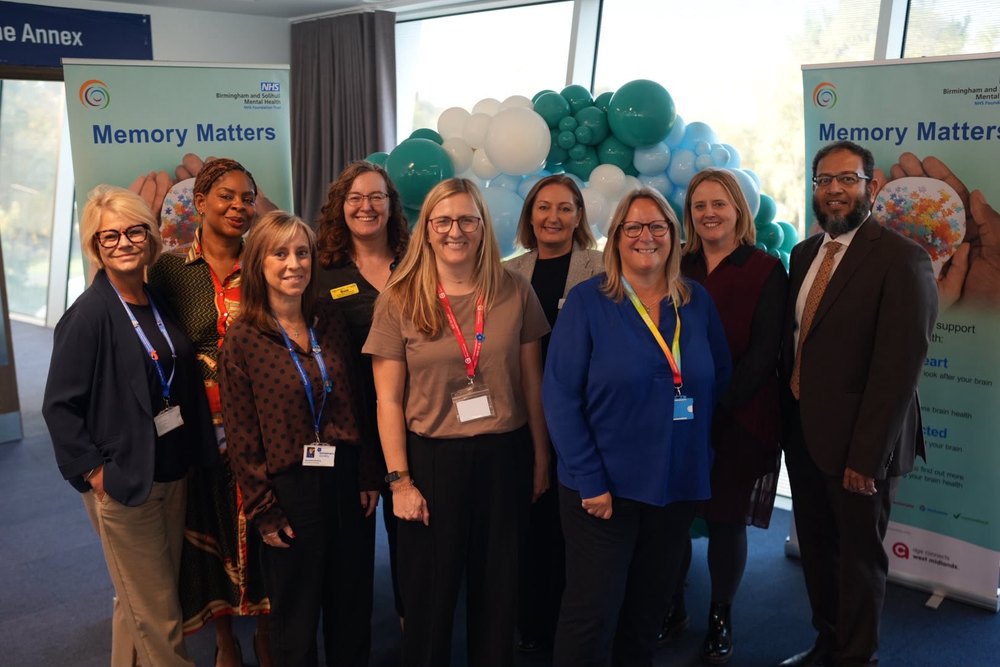
The official launch of Memory Matters was marked by a special event at Alexander Stadium, bringing together the partners involved in the service.
Lou Pickering, Community Service Manager for BSMHFT’s dementia and frailty services and Memory Matters lead, said: “The project is fundamentally about improving awareness around brain health and supporting people being better equipped for conversations when they notice memory changes.
“It’s also about those under-reached communities represented in our services.
“We know there are pockets in our communities that don’t come forward for a memory challenge until quite late in their dementia journey.
“Ultimately, it’s about trying to get that access and treatment in a bit earlier as well.
“We have got two nurses sitting in the north locality and they are working with GPs to try and increase the amount of assessments for non-complex dementias in over-80s.
“That’s really trying to help us work on a neighbourhood level, embed our practice in primary care rather than write to them write on the same records so much clearer access in terms of sharing treatment plans.
“But also people are able to be seen a lot quicker. We’re trying to make things more local to people’s homes, quicker, easier but also raise the profile across the communities about when might you be concerned about your memory.”
She added: “What we’ve like to see once we’ve worked a bit more with communities is what is our access message out there, is it culturally appropriate, are people aware dementia is not part of normal ageing.
“It’s that myth busting we want to get to the crux of. People don’t understand it’s due to a disease and changes to your brain.”
Professor Farooq Khan, consultant psychiatrist and also clinical lead for dementia in the Midlands for NHS England said: “We’re looking at getting people early on on the pathway to dementia into the system.
“At the moment, we all depend on the memory assessment service but the increasing numbers of people being referred, the service cannot see everybody.
“We’re looking at people who can be seen at the early possible opportunity.
“That’s why Memory Matters project is there to look for early diagnosis and treatment for those group of people over 80.
“We’re looking for straightforward diagnosis that can be dealt with at primary care. Secondary care will still remain and be looking after the more complex end of the cases.
“Both the patients and carers have seen ease of access first of all. The assessment is quite simplified and not that you have to wait months and months on a waiting list. We’ve cut down the numbers significantly.”
One family member whose loved one has used Memory Matters said: “I didn’t know the pathway existed so it was a huge relief to know that we’d be able
to come to the surgery and have my family member seen and looked after.
“I have to say, for the past few months the service and the support we’ve had has been brilliant, so we really appreciate it.”
People can find out more about Memory Matters by visiting www.bsmhft.nhs.uk/memory-matters
By Gurdip Thandi | Local Democracy Reporting Service
 50,000 residents affected by bin change blunder
 Andy Burnham dementia pledge welcomed
 Complaints against councillors up as new pledge considered
 Court date set for company after 4,000 litre cyanide canal spill
 Flat plan rejected for ‘looking like a prison’