
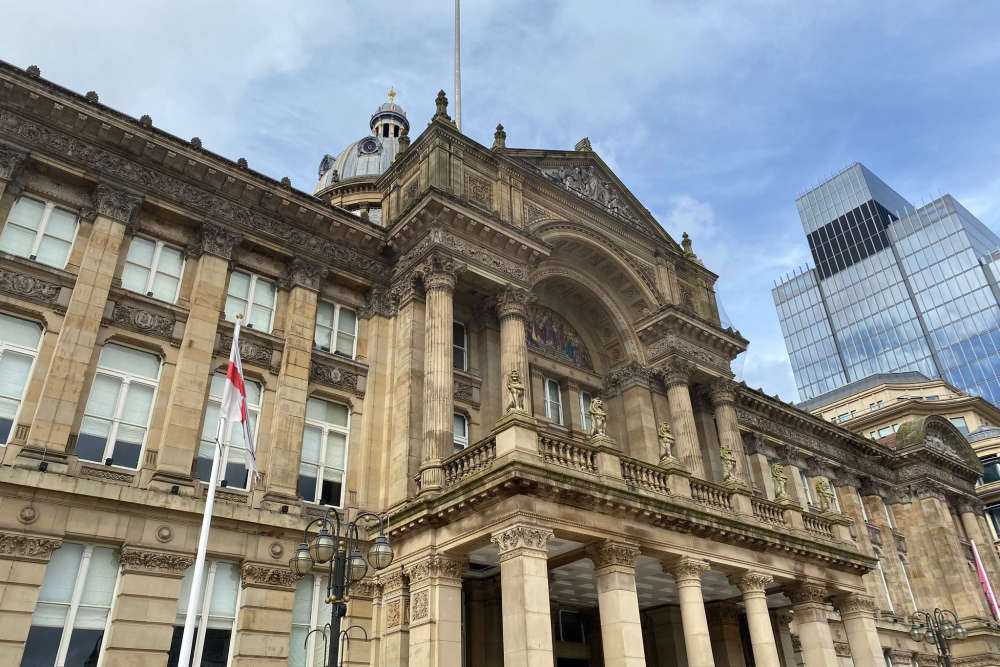
The leader of Birmingham’s Conservatives said his party defied election polls for the city and vowed to work with people ‘across the political spectrum’.
Friday saw a dramatic election count unfold as Brum entered unprecedented territory and firmly rejected the two-party system.
In its place is a mishmash of parties and personalities, with Reform UK, the Greens, Labour, Conservatives, independents candidates and Liberal Democrats all taking seats.
This means no party has overall control of the council – and it remains to be seen whether a coalition can be formed to run it.
Labour paid the price for frustration over issues such as the bin strike and lost control of the council as the likes of Reform, the Greens and independents promised change to voters.
But what of another traditional mainstream party – the Conservatives? They faced a clash with Nigel Farage’s Reform, with both parties criticising the other in the build-up to May 7.
The Tories ended up with at least 16 councillors in Birmingham – a slight drop compared to before the election and fewer than Reform.
But they held onto several seats across Sutton Coldfield, gained two in Sutton Vesey and retain edseats in wards such as Edgbaston and Highter’s Heath.
Robert Alden, the Conservative group leader in Birmingham, held his seat in Erdington, along with Gareth Moore.
Coun Alden was asked by the Local Democracy Reporting Service at the count whether residents could expect things to improve in Birmingham given the city’s politics had fractured.
“The councillors who were elected have been given a democratic mandate from residents in their area,” he said. “The duty now is going to be on everyone to try to work in a constructive manner to deliver a better city for people.
“There are fundamental issues in Birmingham – the state of the finances at the council, the state of rubbish on our streets, the fact there’s still a bin strike going on.
“There needs to be solutions to these problems.
“We put forward a number of solutions and we’re willing to work with people who are interested in making these issues better for communities.
“Ultimately that’s the job of the council – to try and deliver a better city for Brummies.”
Asked why voters were drawn to Reform and the Greens, Coun Alden defended his party’s performance.
“We saw lots of people predicting that in places like Sutton Coldfield and Erdington we [Tories] would lose massively,” he said. “In fact, we’ve managed to hold all those seats.
“I think we’re seeing a very different picture to what the polls predicted.
“Where there are hard-working local councillors, people put their faith in them – and I think that’s a really important part of democracy.
“We need local councillors who will work for their communities and work to make the city a better place.”
He said priorities for the Tories were cleaning up Birmingham, weekly bin collections and ‘bringing back’ local family housing by converting exempt accommodation.
“We’ll try and work with people across the political spectrum to try and deliver those priorities,” he said.
Asked if the Conservatives would be open to a coalition with Reform, Coun Alden responded: “You’re putting words into my mouth.
“What I talked about were specific priorities, that’s where our interests lie because the Local Conservatives always sat where the people of Birmingham sit.
“We want to see an even better city, I love Birmingham and we want to make it a city residents deserve, not the city Labour that left.”
Meanwhile, the Green Party in Birmingham had just two councillors at the start of the week. As Friday came to a close, that number had soared to 19.
There were huge celebrations among Green candidates at Brum’s election count as it became clear they were one of the biggest winners from the election.
A dramatic day of results confirmed a Labour collapse in the Second City, with the party losing control of the council as voters rejected the two-party system and embraced a rainbow of alternative parties and personalities.
The fracturing of Birmingham’s politics means no party has overall control of the council and there will be conversations over how to form a stable administration in the coming days.
This chaotic outcome follows a turbulent period for Birmingham, one marked by a bin strike and a financial crisis at the council that led to unprecedented cuts to local services.
It meant Labour were tasked with overcoming a wave of frustration among residents – and rival political parties and candidates took advantage.
“People are desperate for change,” Green councillor Julien Pritchard (Druids Heath) said at the count. “People want hope things can get better, things can be different.
“We’re offering hope, we’re offering strong community champions.”
On the future of the council given the current uncertainty, he said: “We’ll always work for the best interests of residents across the city and do the best we can for Birmingham’s communities and residents.
“We are going to put residents first and try to push hard to save our services – and that’s what we’ll be looking to do whatever role we end up playing in the new council.”
The Greens gained seats in several wards across the city, including Handsworth, Ladywood, Bordesley & Highgate, Bournbrook & Selly Park, and Brandwood & Kings Heath.
In Stirchley, Green candidate Kamel Hawwash took the ward from Labour’s Mary Locke.
“Although there was a councillor people valued, they look at the Labour Party performance as a council – not as an individual,” he said at the election count.
On the prospect of working with Reform councillors, he said: “I’ve been speaking to some of them today, obviously we have our major differences.
“I don’t know what their stance is going to be about working with other people but I think there will be others we can work with before we have to worry about Reform.”
Rob Grant, a Green councillor who retained his seat in King’s Norton South, was asked why more voters were backing his party.
“We’re very visible,” he said. “We spend a lot of time getting to know the areas, dealing with the issues.”
“The bin strike has to be resolved as soon as possible,” he added. “We need to get our recycling back, get our potholes sorted, fly-tipping cleared.
“Everybody wants to live in a nice place and at the moment, it isn’t.”
Below is the new political makeup of the council – 51 seats were needed for a majority.
There are two seats left to be declared in the Glebe Farm & Tile Cross ward, which was represented by Labour council leader John Cotton. He conceded on Friday that he was likely to lose his seat.









Comments
Add a comment