
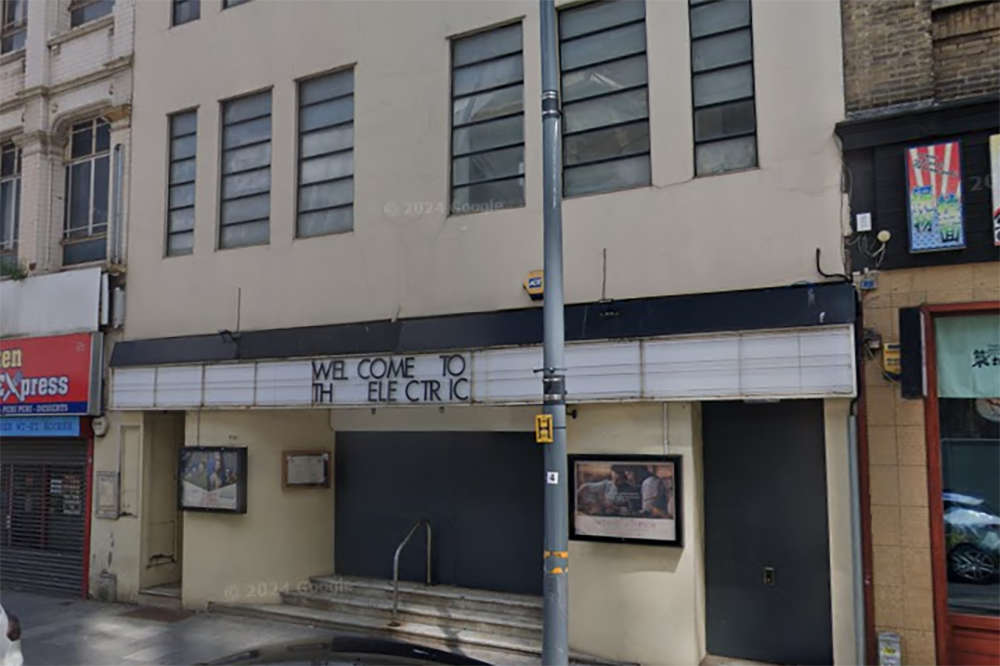
Birmingham’s historic Electric Cinema is to be locally listed – but the council has stressed that the move doesn’t provide “any particular protection”.
The UK’s oldest working cinema closed back in 2024, sparking calls from campaigners to save the Station Street venue.
But the future of the cinema still remains uncertain, with the likes of West Midlands Mayor Richard Parker recently raising concerns over the condition of the building.
The city council is now moving ahead with plans to add five historic city sites – including The Electric – to Birmingham’s Local Heritage List.
At a meeting today, planning committee chair Cllr Martin Brooks acknowledged there had been concerns over a perceived “lack of focus on heritage” in the city.
“At one stage in the autumn, we had no practical conservation officers on the ground,” he said. “Obviously we’re improving that – this is an area the committee has been concerned about for some time.”
He continued however The Electric Cinema being on the Local Heritage List “doesn’t give protection” to the historic building.
“Being on the local heritage list doesn’t give any particular protection to buildings,” he said.
“It just flags up, that as far as we’re concerned, that they are an important local asset.
“Some of these buildings have been rejected for listing by the government and certainly in the case of The Electric Cinema the protection of it has been a concern for some time.”
The council added this week that being locally listed means an asset’s heritage significance becomes a ‘material consideration’ in planning decisions affecting the site.
On why The Electric Cinema was proposed to be locally listed, a council officer said in a report that Historic England had identified the building as an important reminder of “Birmingham’s cinema heritage and the wider development of the city”.
“Beyond its architectural and historic interest, the building possesses considerable communal and cultural significance through its longstanding role as a place of entertainment, social interaction and collective experience for generations of Birmingham residents,” they wrote.
“For more than a century the cinema contributed to the cultural life of the city and forms part of the shared memory of successive communities who used the building for recreation and cultural participation.
“Its continued use as a cinema until 2024 created a rare continuity of function and reinforces its importance as a living part of Birmingham’s entertainment heritage.
“The strong public response to its closure demonstrates the value attached to the building by local communities and highlights its significance as a landmark within Birmingham’s cultural identity. ”
The four other heritage sites approved for inclusion in the city’s own established listing scheme – which has more than 440 entries – are:
- Cherry Reds, John Bright Street
- The Gazette Buildings, Corporation Street
- The medieval moat and Yardley Ridge and Furrow Earthworks, Old Yardley Park
- The Windmill Pub, Dudley Road
Councillor Deborah Harries, Cabinet Member for Culture, said this week: “It’s great to see such a variety of sites being added to Birmingham’s Local Heritage List, which reflect the city’s architectural, cultural, social and industrial history.
“I’m especially pleased to see The Electric cinema being added to that list as, until it closed in 2024, it was the oldest working cinema in the UK so played a vital role in our city’s cultural heritage.
“Today’s decision further underlines the council’s commitment to recognising the significance of our city’s heritage.”
Developer Glenbrook has previously said it had ambitions of re-inventing The Electric and seeing it survive another century.
That could be supported through the delivery of built-to-rent homes in a tower block, along with a vision for seeing Station Street become the “heart of a wider cultural walk”.











Comments
Add a comment