
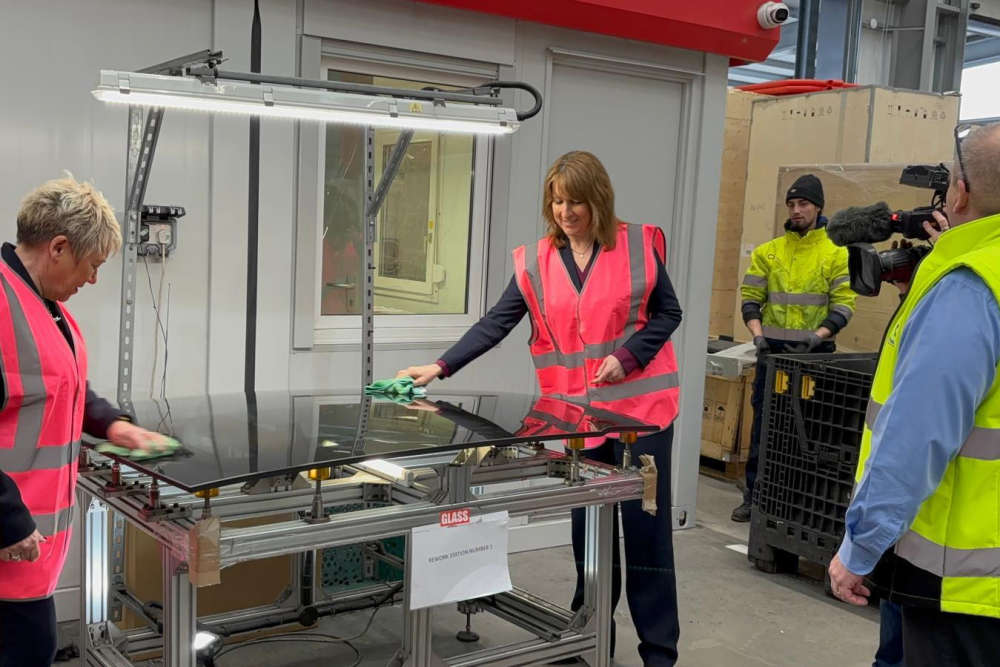
Chancellor Rachel Reeves has said Labour is ‘backing Birmingham’ after the city was beset by high-profile woes such as a bins strike and financial strife.
The Chancellor of the Exchequer, who recently visited the West Midlands, insisted that the government was investing in Brum and praised “incredibly exciting” plans to improve transport in the city.
Rachel Reeves’ remarks come weeks before an all-out election is held at Labour-run Birmingham City Council in May.
All 101 council seats across Brum are up for grabs – this means the election will decide who represents your area and which party runs the council during the next four years at least.
It will follow a turbulent period for the council, which has faced the fallout from a financial crisis and an ongoing bins strike in recent times.
Birmingham Labour will face the usual opposition from the Conservatives, Liberal Democrats and Green Party, as well as independent candidates, Reform UK and a number of smaller parties.
Asked whether Labour can convince voters in the city despite the recent turmoil, Rachel Reeves said: “Birmingham City Council is now out of bankruptcy.
“That is because of the hard work and perseverance of the Labour team in Birmingham – and also being able to work with a Labour government that’s introduced a fair funding formula to ensure [the council] gets the money it needs to deliver services.
“So I think Birmingham City Council has turned a corner.”
On the bins strike, Rachel Reeves acknowledged it was having a “damaging impact” on Birmingham’s reputation and described it as a “real nightmare” for residents.
But she urged Unite the union to “call off” the strike, adding the “ball is in their court”.
Asked whether Birmingham could recover from its reputation being harmed, the Chancellor continued: “This government is backing Birmingham with new investment, working with Tom Wagner [the owner of Birmingham City FC] to build a new stadium.
“But also investing in the young people in that area with youth activities and more clubs, which is so important.”
She continued: “We’re going to extend the tram to Solihull and to that part of Birmingham.
“That’s incredibly exciting and it’s only possible because of the decisions we’ve made to invest outside of London and the South East in our city-regions, including in Birmingham.”
She went on to say that the government was working with Labour West Midlands Mayor Richard Parker to ensure investment “really benefits” people in Birmingham and the wider region.
The Chancellor added that the government was investing in Birmingham in a number of ways, including new transport infrastructure; free breakfast clubs in primary schools; lower energy bills; by freezing prescription charges and rail fares; and continuing the bus fare cap.
“All of those things over the next few months are going to put more money in the pockets of working people,” she said.
Rachel Taylor, the Labour MP for North Warwickshire and Bedworth, also praised the work of Mayor Richard Parker during the visit.
“Things are on the up for the whole of our region,” she said. “That’s better transport, investment into social housing and rebuilding Birmingham.
“Birmingham is a fantastic city with a great nightlife, theatres and places to go out and eat.”
‘Deep-rooted problems’
It was Birmingham specific-issues, such as the equal pay debacle and the disastrous implementation of an IT system, that contributed to the financial woes which engulfed the council.
Labour councillors have also pointed the finger at funding cuts during the previous Conservative government.
What followed the council becoming effectively ‘bankrupt in 2023 was an alarming wave of cuts to local services as well as council tax hikes.
The council’s latest budget plans sparked anger this month, with Conservative councillor Robert Alden describing them as “smoke and mirrors” and condemning services previously being “slashed”.
“Servicing costs are exploding and the same deep-rooted problems – from equal pay liabilities to financial mismanagement – remain unresolved,” he added.
Meanwhile the past year or so has seen striking bin workers claim they face a pay cut of £8,000 – a figure the council has disputed.
The council has repeatedly insisted a fair offer had been made before negotiations came to an end last summer, with the authority saying it had ‘reached the absolute limit of what we can offer’ amid equal pay fears.











Comments
Add a comment