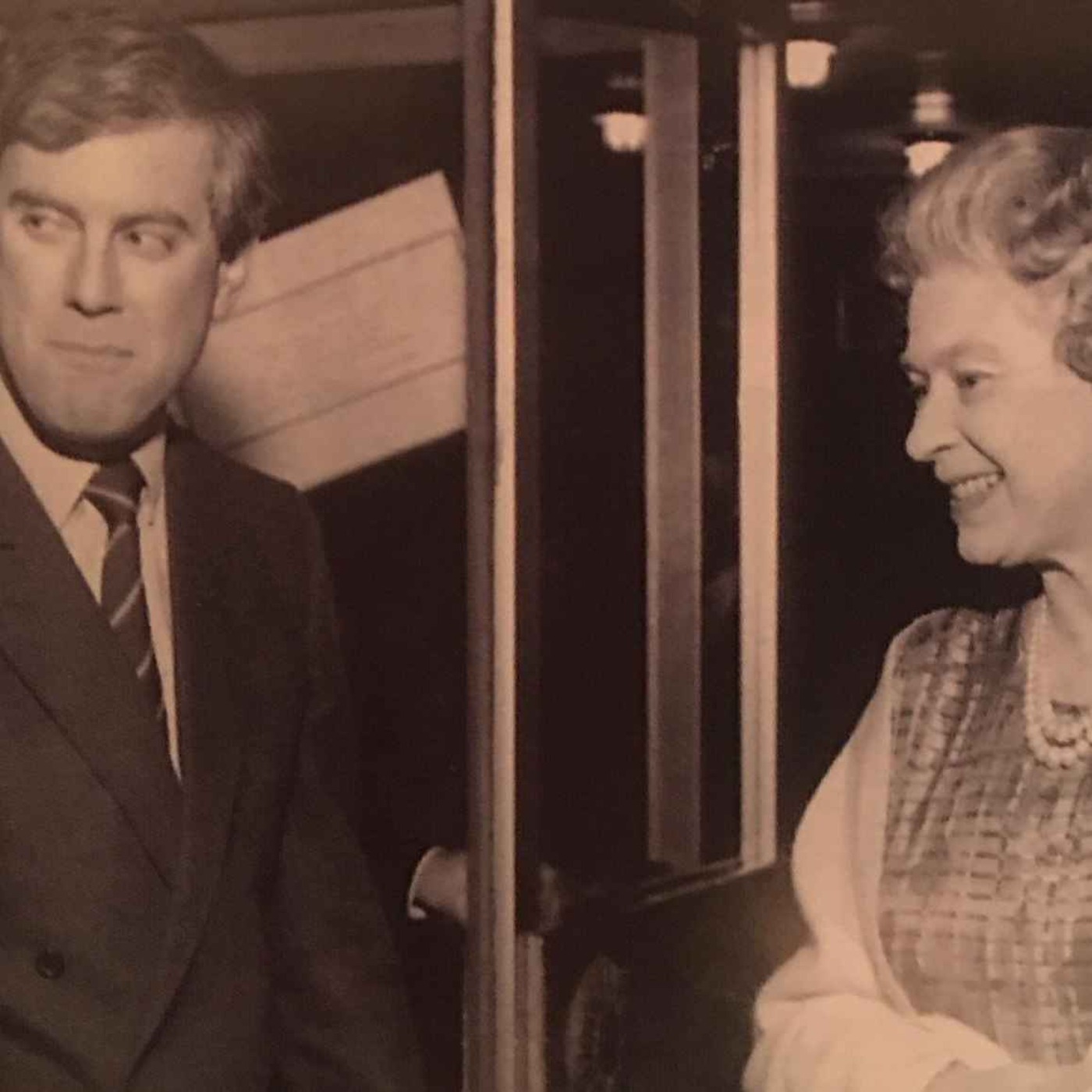
The governments of Australia and New Zealand have thrown their weight behind plans to remove Andrew Mountbatten-Windsor from the royal line of succession.
The intervention from the Commonwealth countries comes amid calls for the former duke to be prevented from ever becoming king.
Backing the calls, a spokesperson for New Zealand Prime Minister Christopher Luxon said the country would support the UK government if it proposes to take action.
Australian Prime Minister Anthony Albanese had already written to Sir Keir Starmer on Monday backing the measure.
Andrew was arrested and interviewed under caution on Thursday 19 February, over allegations of misconduct in public office - something he strongly denies.
Politics latest - follow live
Following his arrest, calls for MPs to consider passing a law to remove the 66-year-old from the line of succession have grown.
In his letter, Mr Albanese wrote: "In light of recent events concerning Andrew Mountbatten-Windsor, I am writing to confirm that my government would agree to any proposal to remove him from the line of royal succession.
"I agree with His Majesty that the law must now take its full course and there must be a full, fair and proper investigation.
"These are grave allegations and Australians take them seriously."
Changing the line of succession would require the agreement of all 15 realms of the Commonwealth where the British monarch is also the head of state.
Only New Zealand and Australia have so far backed the move.
Sky's royal commentator Alastair Bruce said Albanese's letter "must help the prime minister", but warned that it may not be so simple to get all to agree.
He said: "It takes a lot of time, and I think parliaments across the world who have the King as head of state will not be looking forward to having to find time to do this."
Asked about support for the move, Bruce said that "particularly since Elizabeth II died", we are living in "a post-deferential age", when "the attitude of people to institutions generally, not just the Royal Family, has altered".
He added that the monarchy was "suffering at the moment from the fact that its reputation is hugely damaged, and it will want to see to it that a solution is found that those who need justice receive it".
The UK government is understood to be considering introducing legislation to remove the former duke from the line of succession.
But any such move would only happen once the ongoing police investigation into him has concluded.
Andrew is currently eighth in line to the throne, behind Prince William and his three children, as well as Prince Harry and his two children.
Australia has had a republican movement for well over a century, and it became the official policy of the country's governing Labor Party more than three decades ago, in 1991.
In 1999, a referendum on becoming a republic was held. Some 55% of voters supported remaining a constitutional monarchy, while 45% wanted to become a republic.
The latest polls show similar results, although republicanism is stronger among younger people.
Mr Albanese said on Friday that his government was not intending to hold another referendum, despite his personal support for having an Australian head of state.

(c) Sky News 2026: Andrew Mountbatten-Windsor: Australia and New Zealand back plans to remove him from line
 'Simply a miracle': Baby boy born from dead donor womb transplant in UK first
 Russian invasion of Ukraine shares 'similarities' with run-up to Second World War, armed forces minister says
 Queen meets Gisele Pelicot and praises rape survivor's 'extraordinary dignity'
 Children's home manager abused vulnerable boys and girls in 18 year 'regime of fear'
 Tourette's campaigner 'deeply mortified' after racial slur at BAFTAs
 'Staring down the barrel at higher costs': UK businesses face uncertain future over US tariffs
 Police investigating 'abhorrent' online racist abuse of top flight footballers
 Jubilant Team GB return home after record-breaking Winter Olympics