
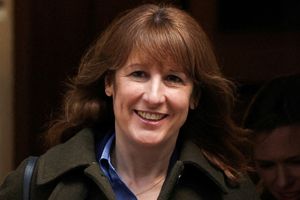
You know me best as Sky News's political editor, but I am also a mum to two teenagers aged 13 and 16.
They were babies born into the age of the iPad, the smartphone and social media and have grown up in what I call the digital Wild West.
From the iPads when they were younger, to the smartphones at secondary school, raising children against the backdrop of the explosion of social media, gaming platforms, and artificial intelligence has been like trying to navigate a new frontier without a playbook.
It has been a constant battle to balance the benefits of using technology - be it creative play on Minecraft or Roblox - while trying to keep them safe in these spaces where chatrooms are rife and protect their growing minds.
I have had countless conversations with friends as we fret about the possible erosion of our kids' attention spans or obsession with screens.
As my kids have got older, online platforms have given them a space to socialise with friends while gaming, or revise in groups online.
But I've also been confronted with the challenge of attempting to limit screen time and restrict - or ban - the use of social media, be it Snapchat, TikTok or Instagram. It's made all the harder when all their peers are using these apps to communicate and socialise.
There is an almost intoxicating draw for this stuff for teens who naturally want to break boundaries, are led by their peers and want to impress. Social media impacts them and their relationships at a critical period of both exploration and vulnerability.
Research shows social media drives poor body image in girls and can lead to self-harm. Boys can find themselves exposed to toxic masculinity and misogyny.
The TV series Adolescence became a global conversation because it captured a zeitgeist global in its reach - how our children are growing up in the digital age, and how as parents can we protect them.
Read more from Sky News:
Do you know what your kids see online?
Instagram and YouTube 'engineer addiction'
So when I say my experience of raising children in the age of social media and smartphones has been anxiety-inducing, time-consuming and, at times, conflict-inducing, I think many of you reading this might feel the same.
Like the Wild West frontier of the 19th century, this technological frontier of the 21st century is rapidly expanding, lawless, and lacking in institutional regulation.
It is populated by some good actors and many bad ones. That's why I can completely sympathise with the parents now screaming to the politicians that they want to turn it off and stop under-16s using social media.
It is a conversation that has been turbocharged by Australia's decision in December to bring in a social media ban for under-16s and a series of landmark trials brought by parents in the US to hold the world's biggest social media companies responsible for harms to children.
Spain and Greece are also considering bans as pressure builds on the government to act.
Could the UK really ban social media for kids?
In the House of Lords, peers have tabled an amendment to the schools bill for an under-16s social media ban. The Conservatives are pushing hard on it and polling suggests two in three adults in the UK back the ban.
In response, the government last month launched a three-month consultation into how to better protect kids online, looking at a possible social media ban, better age verification to ensure kids aren't accessing inappropriate content, removing features that drive addictive behaviours to doom-scrolling, and limiting screen time for young people.
Liz Kendall, the cabinet minister for science, innovation, and technology leading that consultation, met me at a school in London earlier this week to talk to some teenagers about their online experiences as part of the government consultation.
She tells me she's had "hundreds and hundreds of letters from parents saying they want a ban" but says she is undecided and weighing up the evidence.
"Organisations like the NSPCC, the Molly Rose Foundation, the Internet Watch Foundation, who warn about the risks of a ban, argue that if you have a ban it will all just push it underground - that young people will find a way around it," she says.
"That is why we're consulting not only on whether a ban is the right way forward, but other measures.
"How do you much more tightly regulate platforms and have proper age verification measures? Could you have curfews so that there's a break overnight? Or emergency breaks to stop doom-scrolling?
"We also want to look at this issue of VPNs, which we know young people can use to get around this. So, we want to look at all the options."
'Parents are right to demand action'
But the government has come under criticism for not clamping down on the tech companies with the powers they already have.
Andy Burrows, the chief executive of the Molly Rose foundation - set up in memory of Molly Russell, who took her own life aged just 14 after viewing suicide and self-harm content online - tells me that for "far too many years, tech firms have been able to sit on their hands when it comes to children's safety".
"Successive governments have chosen to either do nothing or to make triangulated responses," he says. "You know, when you look at the Online Safety Act, it was watered down, it took years to get on to the statute book.
"It's now being enforced by Ofcom in a really unambitious way. Parents are right to look at the services and the products their children are using and say, 'this is outrageous, we need to see action'."
Is No 10 scared of the tech bros?
Ask inside government and the view from some working in this space is that tech regulation had been put on a back burner. One government insider told me it was for fear of No 10 angering big US tech, and, in turn, Donald Trump and his administration.
But that is beginning to change. Last week, Ms Kendall and safeguarding minister Jess Phillips announced plans to work with tech giants, including Microsoft, on a "world first" deepfake detection initiative to recognise deep fakes and "set clear expectations" for industry detection standards.
It comes days after the UK regulator opened a formal investigation into Elon Musk's xAI and X over its compliance with UK law after claims the chatbot Grok was used to generate sexual deepfake images without consent.
When I asked Ms Kendall if she thought the government had dragged its heels because of fear of a tech backlash, she suggests a clampdown on big tech is coming and points out the government's robust approach to Mr Musk's X and xAI over Grok's fake sexualised images.
"I am determined to do everything in my power to stand up for what is right and proper, to deal with illegal content, to protect children from online harms," she says. "There is further to go, and you'll be definitely hearing more about next steps in the weeks ahead.
"[When] X and Elon Musk were allowing illegal images and sexualised deep fakes of women to be shared, we said that's not only against British values but against British law.
"So we will act to make sure the existing law is upheld but also to go further. We do want to look at more effective age verification measures because young children should not be exposed to that material."
Ms Kendall says she is going to legislate to close the gap in the Online Safety Act on AI chatbots, as some are not covered in the act, and wants to do more on getting non-consensual intimate images taken down more quickly and follow other countries with stricter rules.
For Mr Burrows, the government has done too little for too long, but he also warns parents that a ban is not the panacea they hope it to be.
'Watershed moment'
"The reality is that a ban does not necessarily stop them using these services. But it would make it harder for children to disclose," he tells me.
"You force the problem underground. You force it to sites that are outside the scope of a ban, including gaming platforms."
But having campaigned for years in this area, he also believes "we have reached a watershed moment".
"I think it is clear that the patience of parents has snapped. And so I am confident that we will see action now because it feels like we've reached an inflection point.
"This government has been far too slow to act in its first 18 months in office. Ian, Molly's father, and I met the prime minister a year ago. He promised at that point to take further action, and then we heard nothing.
"The geopolitics have not helped with the pressure from the White House. But I think now I am optimistic that by having this national debate, it is very clear that this is not an issue that ministers can continue to ignore.
"So yes, I am hopeful that we can see the urgent change that every parent needs."
For a government struggling to deliver the change promised to voters at the election in 2024, turning the Wild West of the digital age into a more tame and orderly place for our young people to roam would be a very good place to start.

(c) Sky News 2026: Beth Rigby: The constant challenges I face raising my kids
 Starmer calls for apology from Man Utd co-owner after 'offensive' remarks to Sky News
 'My mum wouldn't have chosen that end - she knew exactly what was going to happen'
 Sex offenders could return to prison over failure to report pregnancy, safeguarding review recommends
 Nottingham Forest sack Sean Dyche - their third managerial departure this season
 EU is 'the biggest prize', Reeves says - as Labour seek closer ties
 Boy arrested over double stabbing at Kingsbury High School in London is former pupil, police say
 Police and prosecutors hold talks over Andrew allegations linked to Epstein files
 12 charged with manslaughter over death of Cambridge United fan attacked after match in 2015